Name:
As Oy Hakaniemenranta 16, plumbing renovation
Location:
Merihaka, Helsinki
Completion:
2025-
Gross area:
5 432 m2
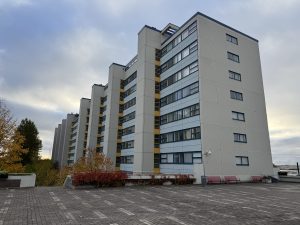
Merihaka (Swedish: Havshagen) is a high-rise residential area by the sea in the inner city of Helsinki. It belongs to the Vilhonvuori sub-area of the Sörnäinen district. However, it is often considered its own district due to its separate location and uniform brutalist concrete style. Merihaka is located between the seashore, the Hakaniemi bridge, and the Sörnäisten rantatie street.
History

Before the construction of Merihaka began, the site was occupied by the industrial buildings of Wärtsilä – originally Kone- ja Siltarakennus Oy. An island named Pannukakku (Pancake) once existed on the site, which was later connected to the mainland.
Built between 1973 and 1986, the apartment building area is said by some sources to have gotten its name from nearby Hakaniemi, and by others from the construction company Haka, which built the area. The design of Merihaka was the responsibility of the housing department of the Central Union of Consumer Cooperatives, which in 1980 became Suunnittelurengas Oy, the largest architectural firm in Finland. The designers of the buildings in the initial phase were Peter Bieber, Arvi Ilonen, and Sulo Savolainen, and in the final phase, Unto Toikkanen. The area has received a lot of criticism, and even its designers felt that it became too massive and heavy-looking due to the oversized building rights.
Merihaka’s most famous resident was probably Finland’s longest-serving Prime Minister, Kalevi Sorsa, whose building at Hakaniemenranta 16 became known as “Sorsanpesä” (Sorsa’s nest). There is now a memorial plaque about Sorsa on the wall of the building.
The Helsinki tax office moved to Merihaka (Haapaniemenkatu 7-9) in December 1974. Since the beginning of 2015, a branch of Stadin ammattiopisto (Helsinki Vocational College) has been operating in the former tax office property.